

When I finally came up for air, my husband’s olive green workman jacket was blotched with tear stains. As if a deep fryer had sputtered hot oil all over him.
“Please tell me that I am going to be okay,” I hiccuped, grasping at him, as if I could shake loose the one magic thing that would drain my current morass of anxieties.
As soon as he hugged me after I returned home from my bakery shift last week, I’d dumped them into his lap: Am I doing enough to promote my book? Why did I leave a high-paying gig to earn near-minimum wage as a baker? Who am I even going to be after this book is published?
“Baby, you’re actually doing so great,” he reassured me.

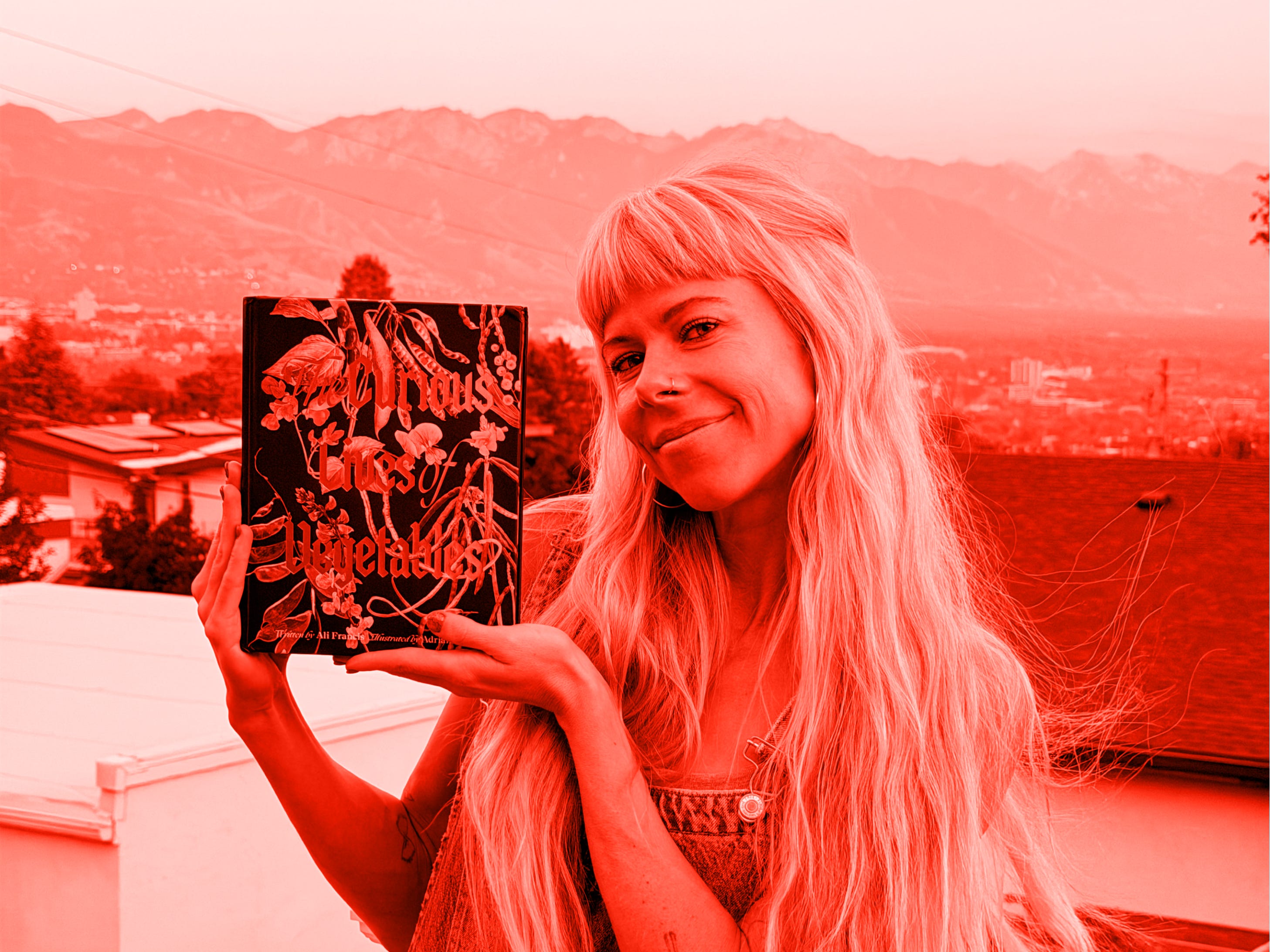
Despite the horror stories you hear about traditional publishing, everything to do with selling my first work of narrative nonfiction, The Curious Lives of Vegetables, had been oddly frictionless.
I first hatched the idea in early 2024 with my friend and collaborator, Adriana Picker, over Instagram DMs while I was riding the chairlift on a powder day at Brighton. By the fall, we’d honed a proposal with our agent, taken six publisher meetings, and received three offers.
But now, on the other side of a year spent researching and writing and losing myself to the wonder of plants, I find myself completely flattened by the prospect of promoting this thing.
As I messaged a friend the other day: “I have to email literally every media person I know asking them to write about my book, or let me write about my own book. Plan a shit ton of events around the country. And email every shop in the world being like, ‘Please stock this, babes.’”
Unfortunately, that wasn’t even half of it.
And the more I contemplated my workload, the more I spooked myself into becoming a nervous little freak who needed a pep talk before sending a single email.
As Oliver Burkeman writes in Meditations for Mortals, that’s because telling ourselves that something is going to be hard has the obvious effect of making it harder:
“By defining meaningful tasks as those that always require exertion, and you as the kind of person who needs pushing and prodding to do them, it turns daily life into an ongoing battle between the kind of person you’d like to be — energetic, productive — and the kind of person you privately fear yourself to be: prone to backsliding at the first opportunity.”
Later that day, after crying all over my husband, I lay prone on my couch like a deflated sex doll.
My laptop was propped open on my upper thighs, a viewing angle that left me with quintuple chins. I’d booked the virtual meditation and journaling workshop, run by an artist I love, because it was $33 and 33 is a significant number for my hairdresser. (Don’t waste your time trying to decode my rationale.)
“First, I want you to write down everything you did in June,” she instructed. “Just the cold, hard facts.”
My bulleted list ( including “nurtured my peppers and tomatoes into being,” “got a pelvic MRI,” and “broke the giant mechanical whisk at the bakery”) sprawled across multiple journal pages. I had, saliently, also worked tirelessly on various book promotion tasks.
“Wow,” I wrote at the bottom of the page. “This is so much. I am hard on myself.”
It’s not as if I’d changed the past with my little list. But I had swiftly changed my perception of it. My attention had become almost comically lopsided — fixated on what loomed ahead, almost blind to the ground I’d already covered.
Maybe this is another way we unintentionally manufacture psychic drag in our lives: by treating our own feeling insufficiency as objective fact.
If mindset can turn book promotion into an existential crisis, then logic follows that it can also right-size it back into the series of relatively straightforward tasks it actually is.
To cultivate this sort of supreme chill, Burkeman borrows a practice from the new age author Julia Rogers Hamrick. It is, admittedly, a little bit woo: repeating the mantra, “I choose to live in Easy World, where everything is easy.”
It’s not as if the universe is a submissive little wimp that happily bends to our will, but I don’t think Hamrick is implying we should rely on magical thinking. I think she is reminding us that, while we can’t make life objectively painless, we can quit making it artificially harder.
I don’t yet know exactly what the easy version of book promotion looks like. But I do know that no one asked for this thing. I wrote it for the love of the game. And surely a thing born from delight and curiosity needn’t be ushered into the world laced with dread.
Today, this means I’m writing a few emails to people I think will actually like the book. Responding to the very kind comments rolling in on our cover reveal. And reaching out to local shops that have expressed interest in stocking The Curious Lives of Vegetables.
Then, I’m going to go to pilates with a friend. Get dinner and explore a newfound stationary shop with my husband. Eat chocolate on the couch while watching period dramas.
Tomorrow, I plan to wake up in Easy World and do it all again.
Anyway! Three prompts for you:
List out the “cold, hard facts” of your June. Did reality align with your perception of it?
Which tasks in your life are you accidentally making harder?
What does your own Easy World look like?