


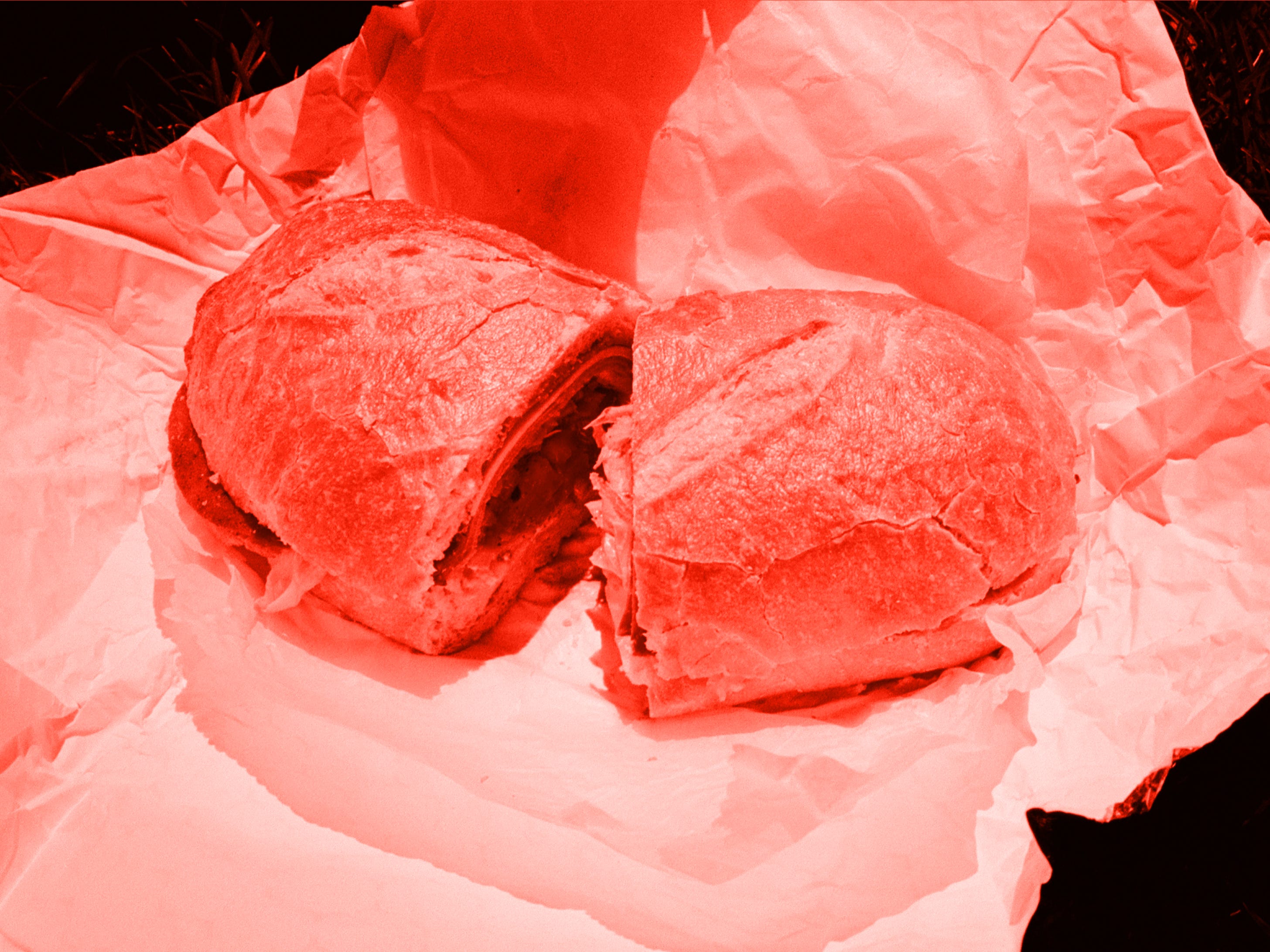
“You also don’t eat gluten, right?” I was in my cousin’s apartment in Krakow, where she glistened with sweat while simultaneously preparing two giant salads, a vegan lentil curry for me, and chicken for everyone else. She didn’t mean it as a dig, but I still responded like a teen bum-puffing a ciggy to look cool. “Oh, it’s totally okay, I’m gluten-flexible,” I said, trying to reassure her that the meal she’d just spent hours preparing would not be scraped into the trash.
Only, I was absolutely not chill. I was both embarrassed about being the most annoying person on Earth and quietly anxious as hell that I was about to undo months of work.
I’d spent the past year following a vaguely “anti-inflammatory” diet driven by the earnest belief that it would fix me. I was already mostly vegetarian. Then I pretty much stopped drinking, even on celebratory occasions, to protect my sleep and ward off the constellation of hormonal pimples that tend to follow. I tried to stick to one cup of coffee a day, with a splash of organic soy milk. And after a lab test revealed early signs of Hashimoto’s, an autoimmune disease in which the body attacks its own thyroid gland, a naturopathic doctor recommended I eliminate gluten.
My friends thought the advice was either woo woo bullshit or a slippery slope towards disordered eating. I didn’t care. While bread has never made me feel anything but a flood of dopamine, my quarterly blood tests showed a steady decline in thyroid antibodies without it. Those levels aren’t necessarily a reliable measure of disease activity, and there was no real way to know whether ditching gluten had anything to do with the results, but it felt like something I could do to stave off the possibility of a boinked thyroid and a lifetime of pills.
Though I didn’t physically feel a whole lot different during my year of rigidity and rumination, the numbers motivated me like miles racking up on a treadmill. Who cared if my pasta was now made of corn, if my bread tasted like drywall, if I couldn’t take a whopping bite of the bouncy pastries I made at work? I had the competitive edge on sickness. This is the sneaky-ass logic baked into modern wellness culture: If self-denial produces improvement, then self-denial becomes not just psychologically obligatory — who wouldn’t want to get better? — but practically virtuous.

In her forthcoming book, How to Be Less Useful, Priyanka Mattoo unravels how adulthood tends to become an endless marathon of productivity and efficiency, typically at the expense of our own pleasure. In the opening pages, she reflects on being similarly obsessed with doing everything right in the name of managing a medical condition she’d been diagnosed with:
“I sit for hours this morning, parked on the street outside my house. With the windows cracked open, I think about every dessert I have skipped for a decade, and marinate in self-pity. I’ve bent myself into unnatural shapes to make sure I’m healthy, well rested, and alert, mostly in service of my family.”
This country’s meritocratic kink tells us that diligent effort inevitably culminates in reward. Yet even the fiercest blitzkrieg of green smoothies and expensive supplements can’t prevent everything. After what she describes as “decades of lifestyle changes,” Mattoo shares the moment she realizes her condition is progressing anyway:
“And all for what? I think now. Bum ovaries, and not one indulgence, while the world lights itself on fire? I’m so bored. And even worse, I’m boring. My perfect schedule, my perfect eating habits, have left me no space or time for joy.”
Though my cousin had made plenty of gluten-free options for dinner in Krakow, a recalcitrant little part of me wanted to eat some pasta anyway. The first forkful of tortellini arrived tainted with guilt. Will this reverse my good girl numbers? But I was too tired to care. Tired of holding everything together. Of checking menus before I went somewhere. Of forcing my friends to eat brown rice when we all really wanted spaghetti. I realized that I didn’t just miss sourdough but also a more spontaneous, alive version of myself.
Slowly, the food became background noise altogether. I wheezed with laughter as my rambunctious family started sipping Japanese whiskey and yelling nonsense over each other, all eating out of the same ice cream tub like a herd of cattle at the convivial trough.
According to the grainy rolls of film I just had developed, the rest of my Euro summer was a wheat-filled odyssey: chewy piles of sweet ricotta and raspberry dumplings that my cousins drove 30 minutes out of the city to collect at 8:07 p.m. in the pitch black from their top-secret “pierogi dealer”; a rainbow of mezze platters and fluffy pita breads the size of my face; and towering slices of apple pie with architectural cross-sections. Each bite was glorious, but I realize now that it was a holiday from optimization that I’d really been craving.

Roughly 90% of people with Hashimoto’s are women. Researchers attribute this disparity partly to differences in hormones and X-chromosome genetics, but biology doesn’t tell the whole story. Chronic stress can also influence immune function, and women shoulder a disproportionate share of the caregiving, domestic labor, and mental load that frazzles our edges. I happen to have a supportive husband who arguably does more around the house than I do, but I’ve also got a tyrannical inner voice that rarely lets me off the hook. It’s a cruel irony that the prescription for women who are stretched too thin is so often to “just relax” while simultaneously doing more.
I know intellectually that a gluten-free muffin can’t fix a culture that minimizes women’s suffering while profiting off our overwhelm. Yet a part of me still believes that if I don’t make all of the “right” choices, then I’m knowingly putting myself at risk. Perhaps it was this fear of not hustling enough for my health that made me avoid an entire food group for a year. Until a bowl of tortellinis reminded me that wellbeing is also about doing what is right for your soul. A life spent trying to avoid illness is not necessarily a holistically healthy one.
I’m still not sure where all this public cogitation leaves me in the long term. (And look, I’m already anxious to hedge! Gluten is, of course, genuinely harmful for some people — possibly myself included. And caring for your meat sack is obviously a good thing!) Ideally, I’ll find a way to treat my body neither like a sanctimonious temple nor a busted garbage truck. But I do know that I can’t go back to fastidiously policing every single little crumb.
A couple of weeks ago, after the final leg of my book tour, I went out with friends in Portland to celebrate. We ate miso-roasted squash, a bowl of beans so creamy and soothing I’ll never need physical touch again, a beet and Jimmy Nardello salad, the most luxurious cubes of cabbage gratin, and a pile of frisée dressed in a zippy vinaigrette. This rainbow-tinted, communal way of eating always makes me feel the best. But it was even better sopped up with some bouncy hunks of sourdough.

Anyway! Three questions for you:
Have you ever given up something you loved in the name of your health? Was it worth it?
Where do you personally draw the line between care and control?
What’s one food — or pleasure — you once deemed “bad” that you’ve welcomed back into your life? How did it feel?