

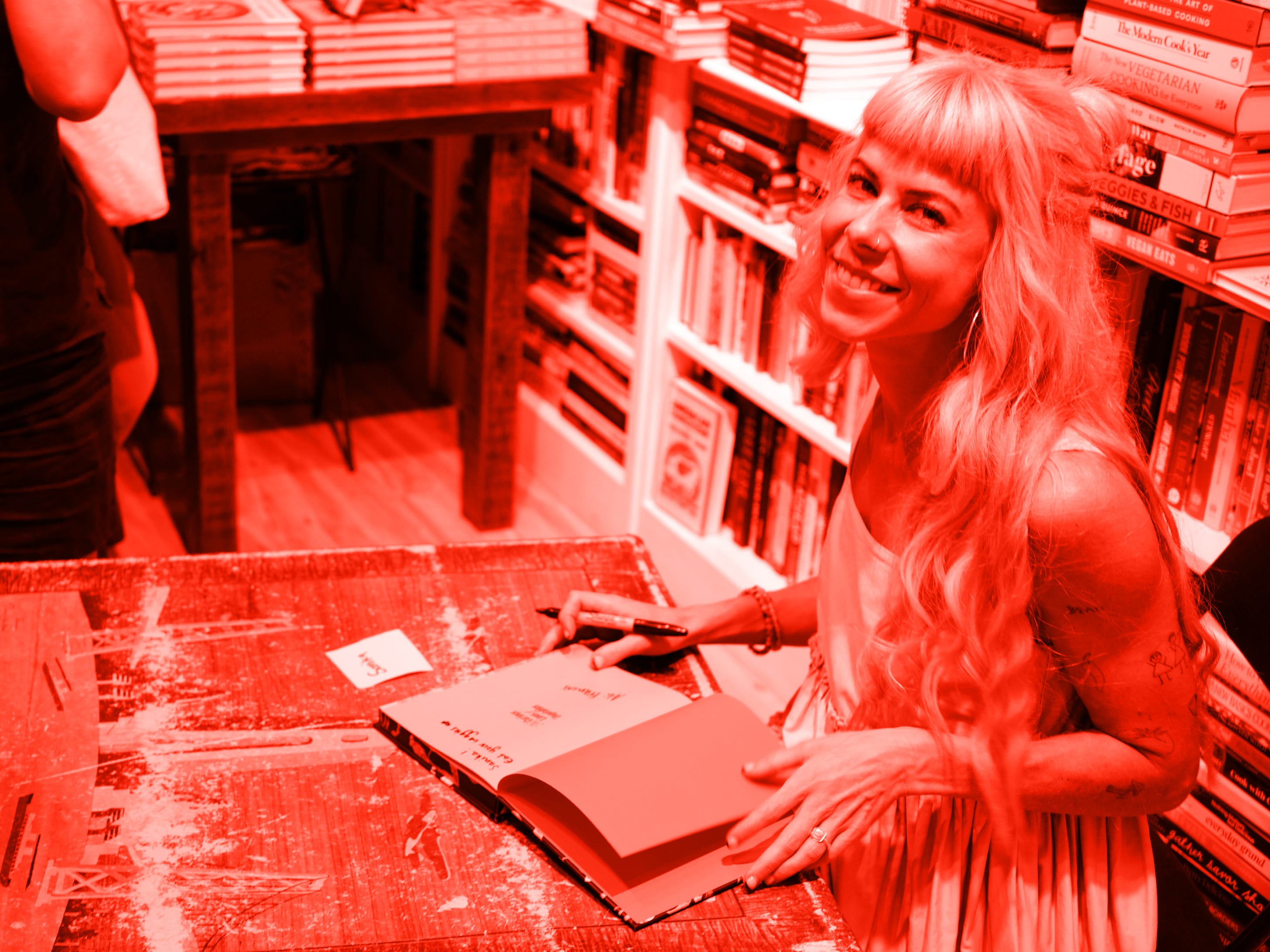
If you follow me on Instagram, you know I won’t stop yapping about my new book, The Curious Lives of Vegetables. This psychedelic, illustrated tome is a bit of a Trojan Horse. Ostensibly, it’s about unusual plants. But I use those little cuties to talk about some pretty heady stuff — war, migration, cultural erasure, capitalism — and hopefully make you love them enough to care about our biodiversity crisis.
Despite the writing process wrecking me somewhere deep inside the soft animal of my body, I’m super proud of the book. Yet the most meaningful compliment I fielded on tour was actually about this sleepy little newsletter: “Something you wrote about your career just resonated so deeply with me,” one of its 163 subscribers told me a couple of weeks ago at my event in San Francisco. “And I just really wanted you to know.”
She had a warm smile that made the skin around her eyes crinkle and my pulse slow. And she’d come to see me speak specifically after reading an emo essay that had absolutely nothing to do with the thing I was speaking about: a big book of vegetables. Wandering to dinner afterward, buzzed off a single glass of effervescent red and the adrenaline rush of surviving public perception, I couldn’t stop replaying our exchange.
In a podcast interview recorded in 2016, Elizabeth Gilbert distinguishes between jackhammers — people who doggedly devote their time and attention to a single pursuit — and hummingbirds — people who bounce between pursuits and fields, “taking ideas from one place and bringing them to another…” I took this to mean that our modes of creativity are as strange and idiosyncratic as we are. Yet lately, making art has felt less like an intuitive process of cross-pollination and more like a problem to be optimized.
I’ve been a hummingbird at heart for as long as I can remember. As a child, I’d flit between writing in my journal with a feather dipped in fuchsia food coloring, molding plasticine into disturbing figurines, and climbing as high as I could in my favorite tree. And adult-me now juggles journalism, creative writing, film photography, and part-time work as a pastry chef. These are all genuine expressions of my curiosity, but they don’t exactly translate into a coherent professional résumé. I have found myself ruminating: Should I be more of a jackhammer?

This line of questioning seems to be one of the more cankerous side effects of social media. In her recently-published book, The Story of Your Life, Kathryn Jezer-Morton studies how algorithm-driven spaces aren’t just archives of our lives anymore — they’re increasingly places that condition how we live them. She argues that we now consider platform incentives and expectations IRL, too:
“Perhaps more worryingly, that audience lives on, even when we aren’t posting content. A phantom set of observers follows us through life, becoming voices in our heads assessing our choices and behavior as if it were content. Is it cute? Is it cringe?”
Google how to be more effective online and the AI swill that populates at the top of the page will tell you: “Build an audience-first strategy that focuses on platform-specific context, high viewer retention through strong hooks, and consistent value rather than random posting.” In other words, the internet prefers someone categorizable and unchanging. And while being a hummingbird might make for an enriching life, it produces a chaotic portfolio of SKUs.
During the months before my publish date, I started to more urgently sense that my unbridled curiosity was a professional liability. Practically speaking, how was I supposed to share a book about vegetables, my introspective newsletter essays, tidbits from the bakery, and the odd thirst trap without getting banished into the digital void for containing multitides? Instead of making the platforms work for me, it seemed I must mold my life into something that worked for them.
My discovery page sensed these anxieties osmotically. It filled with videos and carousels made by meta creators — people who earn money online by pitching themselves as experts who can in turn help you learn to pitch yourself online. I was served up post formats that would reliably command eyeballs, formulaic ways to edit my bio so that people knew what I was “selling,” and tutorials on how to use Claude to master a kind of cyborgian fluency across my captions. Though I tried to retrain the algorithm by clicking on all the food videos instead, I’d already internalized the proposition: To thrive online, you need to paint an algorithmically palatable self-portrait.
There’s something ironic about my sweet subscriber reminding me of the value in creative variety while I was promoting a book about the dangers of cultural and ecological homogeneity. Its core thesis is that diversity is a matter of human survival. And still, I had showed up in San Francisco feeling pressed to contort myself into a more uniform shape, wondering how I would make my next creative pursuits interesting to an audience that had only come for the vegetables. Jezer-Morton flags the consequences in a single question:
“Is whatever competitive edge that you might gain from having honed a compelling personal brand worth the cost to your sense of self?”
It’s freaky to think that some tech-spawned brain worms are chomping into our most intimate ideas right now. And that this total scrambling of our values is happening in such banal fashion, in front of our eyes, as we scroll away our days. It’s not a bug but a feature of platforms designed to monetize our attention. The trouble is, once we notice what’s going down, how are we supposed to distinguish our real voices from the uncanny ones we’ve been trained to project?
While I would love to boast that I’ve figured out how to pry my creative consciousness back from Silicon Valley’s iron grip, I still have bills to pay and the lizard-brain preference to be liked. So it would be great if you wouldn’t mind buying my book, liking everything I post on Instagram, and forwarding this newsletter to a friend.
Anyway! Three questions for today:
Are you a hummingbird or a jackhammer? Do you think it’s your true preference?
Do you make anything that’s entirely for yourself? Have you ever?
How have you found yourself appeasing the algorithm in your own offline life?
