


Roughly one million canal crossings later, my husband and I moseyed up to Het Papeneiland. We perched our asses excitedly on the ramshackle stools out front for the same reason everyone else had: the human skull-sized wedges of apple pie, baked so religiously around the clock that even the dingy downstairs toilets smelled of cinnamon. And yet, a few bites into my sculptural hunk, what I felt wasn’t the euphoria I’d anticipated but something colder and heavier. Panic. Ricocheting around my chest like loose change in a piggy bank.
My husband and I were in Europe for his sister’s Tuscan wedding, and had extended the trip to visit my family in Krakow before partaking in this very important cultural ritual: biking around Amsterdam high as kites off poorly wrapped spliffs while eating as many pastries as possible. The inebriation wasn’t my problem. Nor the sugar dilating my pupils. In a feat of deranged scheduling, I had published my debut book three days before the nuptials. This idyllic sojourn was wedged awkwardly into the middle of my book tour, like a foot-long hot dog stuffed into a regular-sized bun. Delicious, fun, waaayyyy too much.
Preparation! The key to success! This was my personal gospel going into roughly eight straight weeks of travel and self-promotion. In the lead-up to my New York and Salt Lake launches, I diligently invited everyone I knew, compulsively organized catering orders, and coordinated my tour outfits with the book’s psychedelic cover. Before bed, my chest buzzing, I would jot down a string of to-dos in my notes app that were so delirious you’d need a code-breaker to understand them. (“Message the seed people for packets of the weird ones.”) Both events drew nearly 100 people. A triumph, I thought smugly. And, naturally, the direct result of my own hard work.
But sitting there on a centuries-old cobbled street in dappled sunlight, my gob full of buttery apples, it dawned on me that I was now fucked. I hadn’t advertised my four remaining West Coast book events, so much as opened Google Flights, or sent a single email about the snacks. The snacks! In that moment I saw myself from the outside: irresponsibly escaping into some hedonistic European fantasy while the entire second half of my tour was about to flop, its only two attendees, lured by the promise of free food, starving to death in their seats.

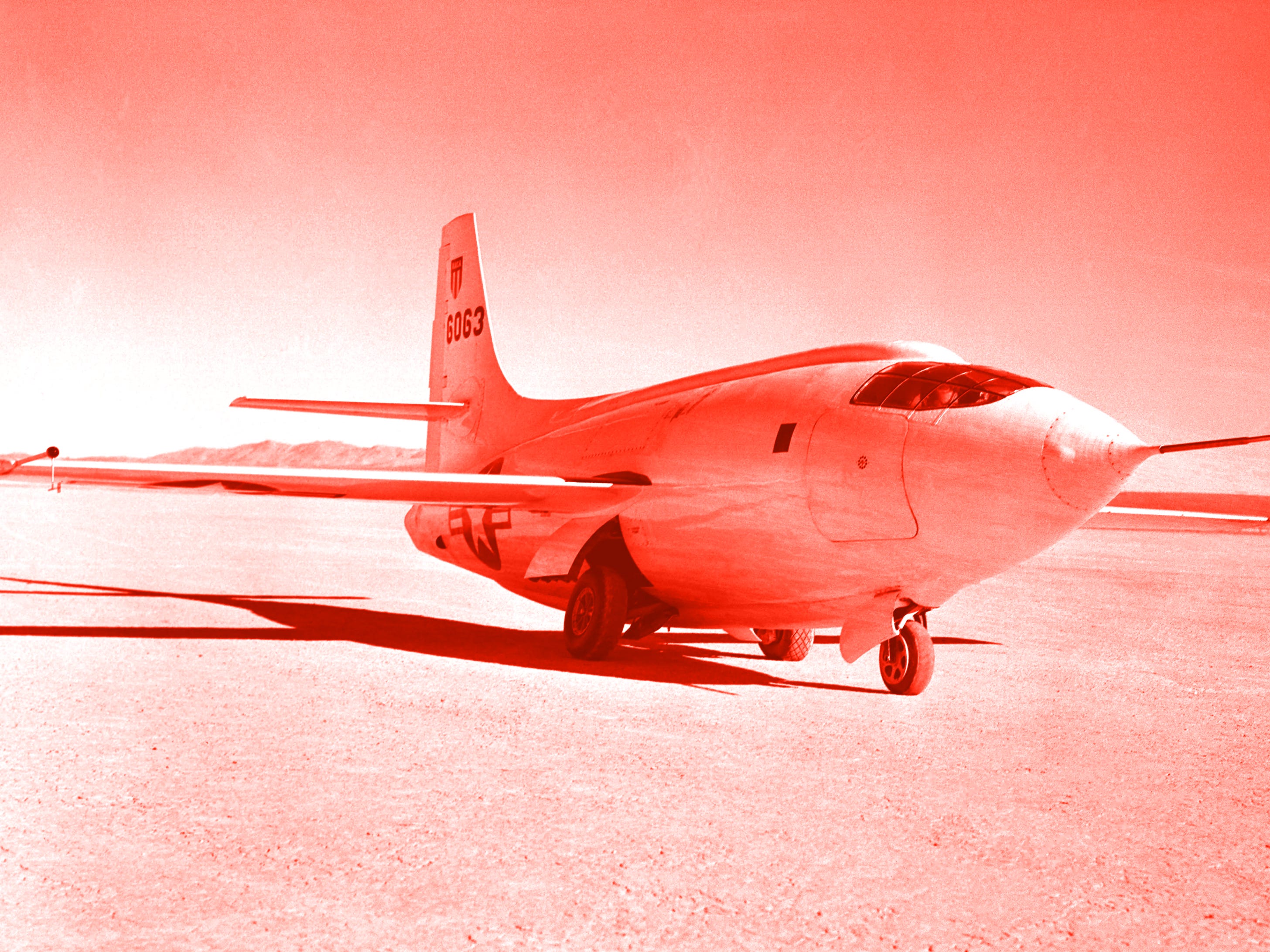
History, of course, is full of heroes who’ve had to face their worst nightmares sans pie. In 1953, legendary test pilot Chuck Yeager flew a second-generation Bell X-1A aircraft to Mach 2.44 (roughly 1,650 mph) at 74,200 feet. In a global display of chest thumping, these new experimental rocket planes were designed for the U.S. Air Force to push the boundaries of speed, altitude, and flight stability. Only, Yeager flew a little too close to the sun and his aircraft went berserk. Inside the cockpit, the pilot was tossed around and around as the plane barrel rolled violently and ripped 360s like a well-greased lazy susan.
As meditation teacher and psychotherapist Tara Brach recounts in Radical Acceptance, Yeager wasn’t the first pilot to face chaos at these mind-bending altitudes. In Earth’s thin upper atmosphere, where the planes behaved in unpredictable ways, she describes other pilots responding by feverishly trying to tame their crafts. (Kind of like how I play computer games by randomly mashing the keys and hoping for the best.) Only, their efforts apparently backfired. In Brach’s words:
“The more furiously they manipulated the controls, the wilder the ride became. Screaming helplessly to ground control, ‘What do I do next?’ they would plunge to their deaths.”
During Yeager’s flight, all that would’ve been audible was the sound of his body thudding against the walls of the plane like a pinball. Pretty soon, the pilot was knocked unconscious, and for roughly 45,000 feet, he flopped about lifelessly while plummeting towards Earth. Yeager miraculously woke up roughly seven miles later, just as the cursed craft re-entered a denser, more predictable layer in our atmosphere. Back in home sky, he knew what to do, righting the ship and touching down safely at Edwards Air Force Base. “Boy, I’m not going to do that any more,” he radioed casually to ground control.
My own response to the slightest whiff of uncertainty has always been to grip the wheel tighter. I’ll study a café menu in forensic detail to make sure I order the right beverage for my mood. I’ve spent thousands of dollars on fertility testing, even though I’m not yet ready to be anyone’s mother. And from the moment I wake up to the moment I switch off my bedside lamp, I’m a squirrel on Adderall. As Brach writes:
“We fill our days with continual movement: mental planning and worrying, habitual talking, fixing, scratching, adjusting, phoning, snacking, discarding, buying, looking in the mirror.”
So it’s cosmically hilarious to me that Yeager survived his free fall, in part, because he had no choice but to chill the fuck out.

I might not have been unconscious walking into my San Francisco book event post Euro trip, but I had been put in a kind of mental straight jacket built especially for Type As in need of exposure therapy. Without an endless runway of time for me to tick off every possible task that would make this night a success, I was certain that no one would come. So I channeled my anxiety into setting up a mountain of flaky cheese-filled boureka’s, a spread of rainbow-hued vegetable dips, and a platter of tiny, espresso-laced brownie bites. And then my friends arrived with too many bottles of natural wine.
I took a thirsty sip of the perfect dry red like a marathon runner who’d just stumbled across the finish line. Its light effervescence danced on my tongue and then fizzed down my throat. And suddenly I felt awake to a truth so universal it’s been echoed by everyone from the First Earl of Bedford in the 16th century to Shakespeare and Doris Day. Perhaps most memorably, the Elizabethan playwright Christopher Marlowe wrote in Doctor Faustus, “Che sera, sera: What will be, shall be?”
I paused to look around at the room, suddenly filled with people spooning great globs of Grimace-colored sweet potato skordalia onto their plates. The lights twinkled dreamily as dusk descended. My friend, who was moderating the talk, walked in wearing the coziest sweater on Earth and held me tight. It was all I’d hoped for.
So here’s the thing a gruelling book tour and Chuck Yeager have taught me about control: sometimes there’s nothing left to do except make peace with our lack of it. I’m not saying hard work isn’t helpful, or that everyone needs to pop a bottle of the good juice to relax. But during the book tour — and my entire life, if we’re being real — no amount of effort has ever seemed like enough. Ruminating, emailing, making lists, staying busy. Its purpose, Brach asserts, is to distract from what’s lurking below the surface: feelings of vulnerability, shame, and grief, all of which happen to inconveniently come up for air right as you put your work and yourself in front of an audience. But while I was caught up trying to outrun my shadows, I barely noticed what was right in front of me: a Platonic piece of apple pie.
After the San Francisco book event, I plopped down in a stiff vinyl chair with my friends at the kind of white-tablecloth Italian joint where everyone talks like they’re straight out of The Sopranos. I didn’t order any more wine because I was already high on adrenaline. A transcript of my thoughts at the time: I’m different! I get the point now! Control is an illusion, my dudes. And, perhaps because of this newfound enlightenment, I was simply so loose and present in the moment that I left the restaurant with my expensive camera still slung over the back of my husband’s seat. Knowing when to hold on and when to let go, I guess, is the work of a lifetime.
Che sera, sera.
Anyway! Over to you:
In what ways are you trying to control life?
How might those efforts be preventing you from really living?
What scares you most about letting go?

You are writing to my soul with this one.
I loved your line “Knowing when to hold on and when to let go, I guess, is the work of a lifetime.” So difficult, but so true.