

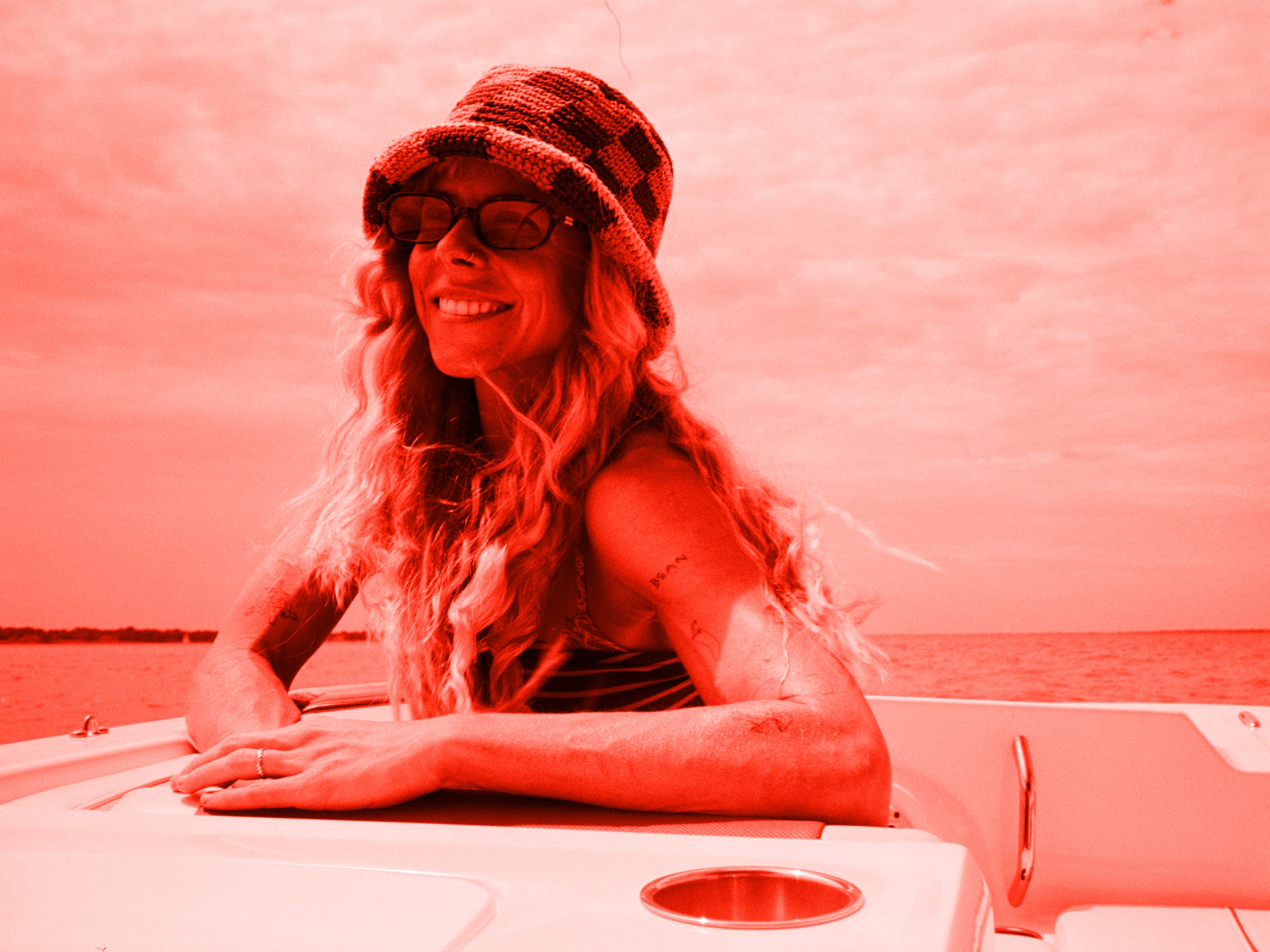
While consuming Instagram videos like a good little rat in Silicon Valley’s content lab, I swiped head-on into a talking head of Australian “one-person band” Tash Sultana spewing the absolute truth about being online today:
“Imagine telling Kurt Cobain, Jimi Hendrix, and Bob Marley that you had to be a consistent content creator on fucking Meta and TikTok to be relevant in 2026. And that your talent alone just wasn’t enough…you had to be really, really cringe as well.”
I snorted coconut water out my nose watching the rant, because Tash is funny as hell and because I saw myself in this dilemma. (I am also hilarious, you’ll have to believe me).
My first book, The Curious Lives of Vegetables, comes out in less than three months, and I desperately need people to buy it in order for me to continue liking myself. And also to fulfill my book proposal’s core promise: that I know how to shill my own work.
So, whether I want to or not (not), I am filming trial reels about my creative process, stepping up my posting frequency, and narrating some pretty incoherent thoughts into cyberspace — you know, to see what metaphorical spaghetti sticks to the wall.
Unfortunately most of it has so far been scraped, cold and flaccid, into the digital InSinkErator. Duh! The internet sucks! What I didn’t see coming was the nausea. Every time I willingly ask the faceless online masses for a little bit of attention, I feel as though I might throw up.
Art and content tend to demand opposite behaviors.
Writing an essay like this calls for depth, attention sustained over time, solitude, and a certain comfort with ambiguity. (I.e., being lost in the weeds on a draft and trusting that you will eventually emerge with something to say.) Marketing an essay like this rewards frequency, agility, and the strength to hang on tight while the algorithm bucks around wildly.
Art asks, “What do I want to communicate?” Content asks, “What will people engage with?” Or, as my friend and beadwork artist Bianca Velasquez explained over email:
“In making content there is a healthy amount of considering trends and the audience. In making art, however, I never consider the audience (sorry). That is my space to express what I want, how I want…I’m not thinking about visual trends or hitting social beats.”
In these hyper visible times, artists of all stripes have become inseparable from their products. And an aesthetically pleasing “feed” is essentially the new business card, a theoretically wide net for reeling in new audiences and opportunities. In Velasquez’s words:
“I maintain a lot of connections from in-person networking on social media and it is about 75% of the methods I use to promote my shows and work. Saying that I make content purely for the sport of it would be a lie.”
Commercially successful creatives today are the ones who’ve learnt how to translate their work into the language of modern platforms. As Lisa Kholostenko recently unpacked in Empty Calories, “It’s not accidental that all eight of the 2026 Grammy Best New Artist nominees have meaningful ties to TikTok.”
And fine, okay? This is where I’ll say it out loud: I want my book to go big. I want strangers to read it, and love it, and learn something from it, and then tell their friends about it. I want guests at my launch events. I want to make enough money that I can write another book.
The hiccup is that I would rather fake my own death than be seen wanting to succeed. Somewhere between finishing the work and asking people to care about it, I began to feel butt naked in a fluorescent headlight.
And that’s a real content blocker, let me tell you.
I get that artists have always had to convince people that their work mattered. In the 1400s, Leonardo da Vinci wrote letters to dukes explaining why they should hire him. Picasso pretty much networked himself into stardom. Musicians schlepped to open mic nights.
What feels different today, is that content creation essentially asks us to self mythologize. Instead of outsourcing that job to critics or patrons, we unlock our phone screens with our unique facial features and take matters into our own hands.
When we stare dead-eyed into the camera and say, “I was X years old when I learned Y,” we’re marketing ourselves as much as our work. As Kholostenko writes, “You’re either commodifying yourself as the resource, or commodifying your life into something consumable.”
I thought I was coming here to complain about that. It’s vapid! It privileges and perpetuates good performers over good artists! Algorithms are collapsing originality! The medium of marketing is changing the work itself! Social media is dead anyway!
That might all be true. It’s comforting to think my social media resistance is ideological rather than personal. But then Velasquez, an incredible talent, told me she enjoys creating content:
“I love sharing my love of music and art and video all in one go. [But] when I need a moment to just get lost in a piece and focus on the flow state, I don’t pressure myself to bring the camera out for the sake of content.”
For her, it’s not that deep. Velasquez doesn’t seem overly burdened by the contradictions between making and marketing that I seem so insistent on proving exist.
So what if the problem is actually…me?
Monetizing your skincare routine is one thing. Sharing work that exists independently of the internet is another. And the artists in that latter camp confront something atavistic and reptilian inside of me: I want to be understood and appreciated without ever having to expose myself.
My ick with content creation is really a reluctance to put myself out there. Anyone who knows me knows I am not shy, nor particularly anxious. I’m not worried about doing something wrong, I fret about being someone wrong.
And every tap of the “Share” button triggers my deepest held fear: that, unless I try very hard, people won’t find me interesting enough. Not my forthcoming book. Me. I fear that I will have fundamentally misunderstood my place in the world, by mistaking myself for someone who should be heard. Unfortunately, a fickle algorithm very often reinforces that thought loop.
But do I not agonize over sentences in the hope they will resonate with someone? That they will shake loose something deep and important? Art has always been an attempt to reach another person. It’s a process that wants an audience, a conversation.
There’s plenty of reasons to condemn social media — I mean, I recently wrote about how it’s killing our aliveness and our whimsy — and I will not stop dreaming of a life where I can finally log off like Sally Rooney.
But right now, these platforms are one of the few ways I have to share work on my own terms. And perhaps more importantly, they’re forcing me to grow up and embrace the cringe. To show up vulnerably and prematurely, before anyone has given me permission to be here.
Anyway! Questions for you:
What’s your own version of “climbing cringe mountain”?
Have you ever loved making something but struggled to share it?
Where in your life are you waiting for permission?
Ali, I have been feeling exactly this way lately in thinking about how to market more of my own work. I'd rather spend my time untangling the weeds of a draft than planning out what to say in an IG reel but alas, this is the world we live in. Sometimes I think I spend too much time pouting about it, when no one actually cares and I need to get over myself (this is the pep talk I give myself lol). Yet the whole reason we do it is because we want them to care? Confusing! And yet I am here, working on it!